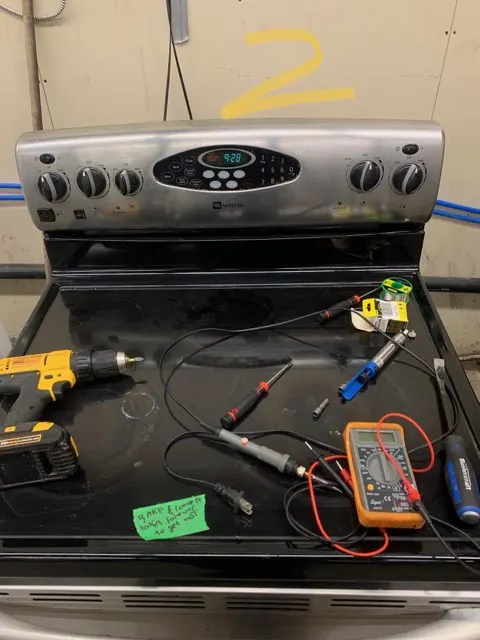
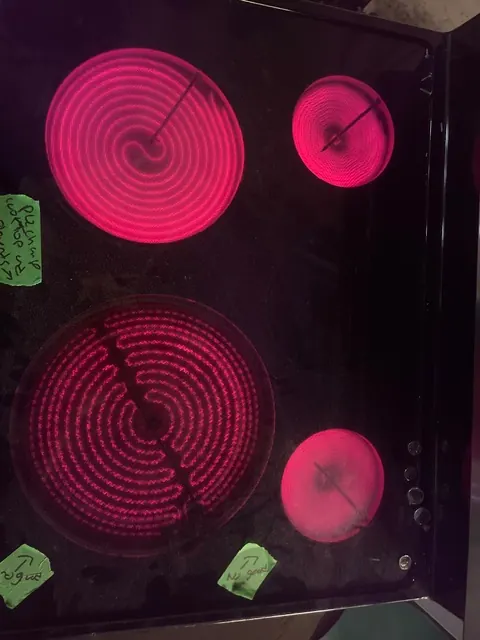
The note on the cooktop said it all. The clock worked, the fan ran, and the oven took an age to reach temperature. The element looked fine. The problem was one step upstream.
Real RepairWell photo · An electric range set up for testing.
The short version
Why it happens, how common it is, how we fixed it
1
Why this problem happens
Every oven heater is switched by a relay on the control board. Over time the relay contacts pit and stop closing reliably, so the element gets power only part of the time. A failed bake element, a sensor reading wrong, or a burnt wiring connection can cause the same slow preheat.
2
How common it is
“Takes forever to preheat” is a common oven complaint. The most frequent cause is a failed bake element, where the oven limps along on the broil element. A worn relay on the board is less common but shows up regularly on ranges with electronic controls.
3
How we fixed it
We tested the bake element and the temperature sensor first. Both were normal. That pointed to the board: the bake relay was switching intermittently. We replaced the board by its own part number and confirmed with a separate thermometer that bake and convection bake reached and held temperature.
The full story
The green note on the cooktop is the customer's description, word for word: bake and convect take forever to get hot. The clock worked. The fan ran. Dinner was late every night.
Slow is different from cold
An oven that does not heat at all and an oven that heats slowly can have different causes. When preheat drags on, a few possibilities come up first:
The bake element has failed, and the oven is limping along on the broil element alone.
The temperature sensor is reading wrong, so the control thinks the oven is hotter than it is and keeps cutting the heat.
The relay that switches the bake element is not closing reliably, so the element gets power only some of the time.
A wiring connection at the element or the board has overheated and is making poor contact.
Working through it
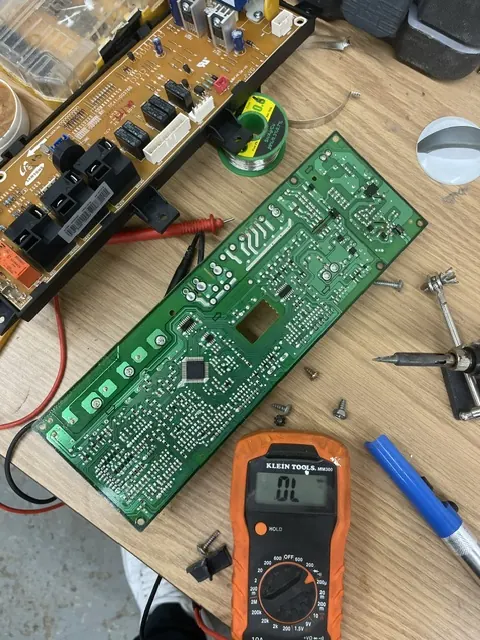
The bake element looked normal and tested within range. The sensor's reading at room temperature matched what it should be. That pointed further upstream, to the control board behind the touchpad.
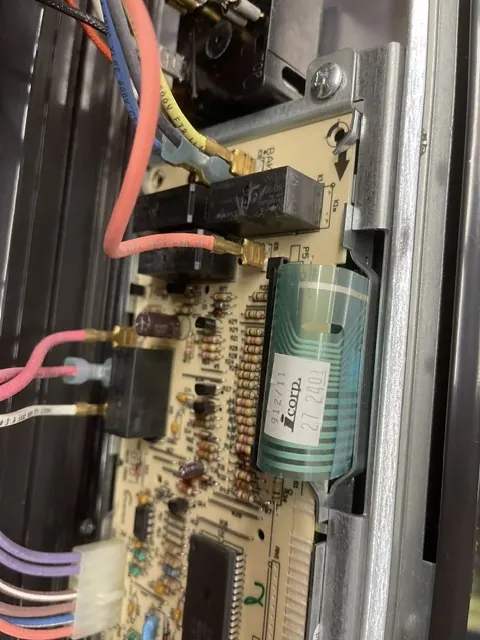
The relay board inside an electric range.
This is the board from that range. The black rectangular blocks near the top are relays. Each heater on the oven has one. With the oven set to bake, the board called for heat, but the bake element received power only intermittently. The relay contacts were no longer closing cleanly, so the oven was getting a fraction of the heat it asked for.
Every oven does it a little differently
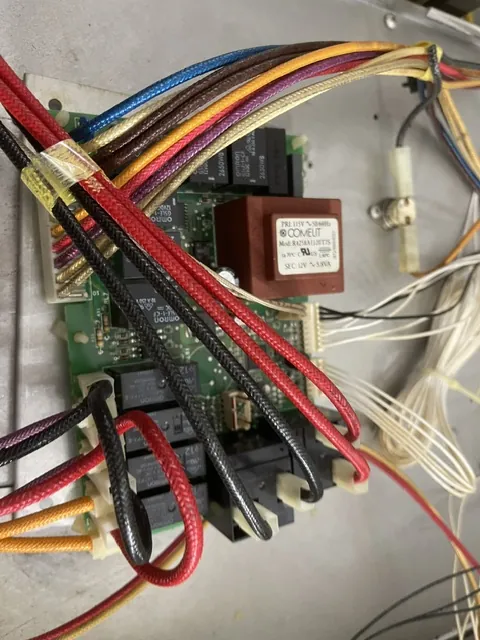
The next photo is from a different oven, a higher-end model with its relay board mounted in the back. The layout is different, but the idea is the same: a transformer to power the electronics, and a row of relays switching heavy current to the elements through high-temperature, braided wiring. When one relay wears out, the symptom depends on which element it serves.
An oven's relay board and high-temperature wiring.
The repair and the check
We replaced the control board using the part number on the board itself, then ran the oven through bake and convection bake with a separate thermometer in the cavity to confirm it reached and held temperature. The written finding recorded the element and sensor readings as well, so if anything changes later there is a baseline to compare against.
Before you book, a few safe checks
Make sure the oven is not in a delay-start, Sabbath or demo mode. Your manual lists how to exit these.
Check whether the bake element glows during preheat. If it stays dark while the broil element works, note that for the technician.
Use a separate oven thermometer to see how far off the temperature really is.
Stop using the oven if you see sparking at an element or smell burning plastic from the control area.
Anything involving live wiring, gas or refrigerant is technician-only.
The photos in this post are from a real RepairWell job. We use them to explain the possible causes of this problem and how it gets fixed. Every appliance is different, so your fault may have a different cause; the diagnostic visit confirms it.