Oven self-clean problems (won't start, won't unlock, tripped breaker after cleaning)
Self-clean problems come in three kinds: the cycle won't start, the door won't unlock afterwards, or the oven stops working after the clean.
Soon A self-clean that won't start is an inconvenience, but heavy smoke, flames in the oven, or a breaker that trips during or after cleaning means stopping and leaving the oven off.
What this symptom usually means
Self-clean problems come in three kinds: the cycle won't start, the door won't unlock afterwards, or the oven stops working after the clean. A cycle that won't start is usually a setup issue. GE says self-clean won't start if the oven is still too hot from cooking, if the cycle isn't set exactly as the manual requires (on older mechanical-timer ranges that means dials and both oven knobs set to Clean), if the Bake and temperature knobs were swapped after cleaning, or, on a double wall oven, if you try to clean both cavities at once. A door that stays locked after the cycle is usually still cooling. Whirlpool says the door locks a few seconds after the cycle starts, that the cycle time includes a 30-minute cool-down, and that the door won't open until the oven has cooled to about 95 °C (200 °F). LG says the convection fan keeps running until the oven has cooled, and never to force the door while the lock icon shows.
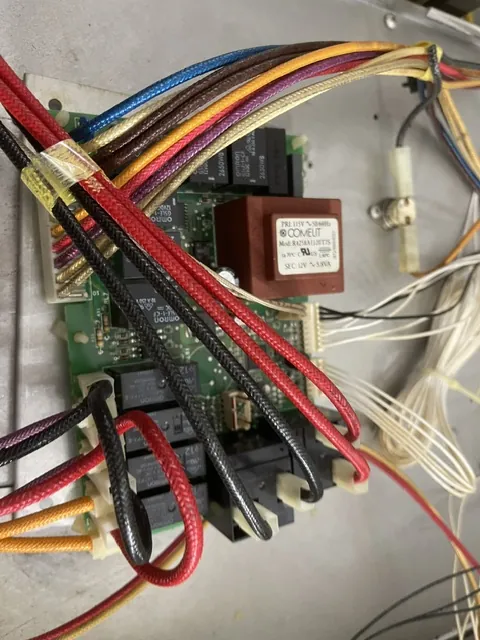
The third kind is the one to take seriously. A high-temperature clean runs the oven far hotter than cooking does, for three to five hours on LG's settings, and it can be the last straw for a part that was already weak. An oven that is dead afterwards, or a breaker that trips during or after the clean, may point to a thermal fuse or high-limit device that opened, a bake or broil element that shorted, an overheated wire or terminal, the door lock, or the control. Reset a tripped breaker once at most. If it trips again, leave it off: something may be drawing too much current, and it needs to be found before the oven is used.
Checks you can do yourself
- Let a hot oven cool firstGE says self-clean won't start if the oven temperature is too high, for example straight after baking. Let it cool completely, then start the cycle.
- Set it up the way your control expectsOn electronic controls, GE says to select the clean key and set the cycle as the manual describes; LG lets you choose 3, 4 or 5 hours. On older mechanical-timer ranges, GE says the dials and both oven knobs must be set to Clean exactly as the manual shows.
- One oven at a time, knobs in placeOn a double wall oven, GE says self-clean runs on only one oven at a time. If you washed the knobs, GE says to check the Bake selector and the temperature knob weren't swapped when you put them back.
- Door locked after the cycleWhirlpool says the door won't open until the oven has cooled to about 95 °C (200 °F); allow 30 to 90 minutes. Its reset is to press Cancel/Off and wait 20 to 30 seconds, or to switch off the breaker for one minute. If a power cut interrupted the clean, Whirlpool says to select Self Clean, then Cancel, wait a couple of minutes and try again. Never force the door. The oven door locked guide has each brand's steps.
- Prepare before the next cleanWhirlpool says to remove the racks (unless the manual says they can stay), broiler pan, cookware and anything in the storage drawer or on the cooktop, hand-clean the door edge and about 4 cm (1½ in) around the frame, and wipe out loose soil to reduce smoke. Keep the kitchen ventilated and never block the oven vent.
- Protect pet birdsWhirlpool and GE both warn that some birds are extremely sensitive to self-clean fumes, and Whirlpool says exposure can kill them. Move birds to another closed, well-ventilated room for the whole cycle and cool-down.
- Heavy smoke or flameLG says to stop the cycle by turning the mode knob to Off or pressing Clear/Off. Keep the door shut. Ottawa Fire Services' advice for an oven fire is to turn off the heat, keep the oven door closed to contain the fire, and call 911 if it is growing.
Nothing above involves gas, wiring, refrigerant or removing panels.
What you notice, and what it can point to
Listed in no particular order. They help you describe the problem; only an inspection confirms the fault.
Self Clean won't start straight after cooking
Could point to: Oven too hot for the cycle to begin (GE)
Next step: Let it cool completely, then start
Door still locked soon after the cycle ends
Could point to: Oven still cooling to about 95 °C (Whirlpool)
Next step: Wait 30 to 90 minutes; then Cancel/Off or a one-minute breaker reset
Clean interrupted by a power cut, door locked
Could point to: Control waiting on the interrupted cycle (Whirlpool)
Next step: Select Self Clean, then Cancel, wait, try again
Oven dead after a clean, display blank
Could point to: Thermal fuse, control or supply fault possible
Next step: Check the breaker once; book if it's still dead
Breaker tripped during the clean
Could point to: Possible shorted element or overheated wiring
Next step: Leave the breaker off and book
Heavy smoke early in the cycle
Could point to: Heavy soil or spills left in the oven (Whirlpool)
Next step: Cancel, let it cool, wipe out loose soil, ventilate
How it differs by design
- High-temperature self-clean: burns soil to ash at very high heat and locks the door for the whole cycle and cool-down. LG offers 3, 4 and 5-hour settings for light, moderate and heavy soil; Whirlpool's cycle time includes a 30-minute cool-down.
- Steam or low-heat clean: many newer ovens also offer a short, low-heat cleaning mode for light soil. It is much gentler on parts, and some models lock the door during it too.
- Mechanical-timer ranges: GE says the start and stop dials, the clock and both oven knobs must be set exactly as the manual describes, or the cycle never begins. Older ranges may also have a manual door latch that must be slid fully across.
- Double wall ovens: GE says only one cavity can self-clean at a time.
- Gas ovens: the gas burner provides the heat, so a clean that won't heat may involve the igniter or valve. That is gas-side work for a certified gas contractor.
What our technician checks
These need panels off, live electrical tests or a licensed trade, so they are left to the technician:
- Removing the back or control panel to test fuses, relays or the lock
- Testing elements and wiring with meters
- Forcing the door or latch open
- Resetting a breaker again after it has tripped a second time
- On gas ovens, any work on the burner, igniter or valve
Waived when you go ahead with the repair. You get the cause, the price and our repair-or-replace verdict in writing before any work.
Repairs a technician may recommend
After inspection, not from the symptom alone.
Thermal fuse or high-limit device
On models that use one, when the oven went dead after cleaning. The technician also looks for what let it overheat, such as a blocked oven vent or a cooling fan that has stopped.
Bake or broil element
When a breaker tripped during the clean and an element is found shorted or burned through.
Door lock motor and switch
When the cycle won't start because the control can't confirm the door is locked, or the lock won't release once the oven is cold.
Control board or relay
When the cycle starts and stops by itself, or the oven is dead after cleaning while the fuses and elements test fine.
Wiring and terminal connections
When a connection at an element, the terminal block or the control has overheated. Scorched wiring is repaired before the oven is used again.
Cooling fan
On models with a cooling fan, when it has stopped and the controls or door area run too hot during the clean.
Brands we see with this problem
Codes, parts and access differ by brand; the brand pages cover where the model label is and what to expect.








Cost, and whether to fix it
What the repair costs depends on the part, the labour and whether a second visit is needed for an ordered part; the written finding gives the total before any work. Our guides on what drives repair costs, oven repair costs and repair versus replacement explain how to weigh it.
When to book
Book when the oven is dead after a clean, when a breaker has tripped during or after one, when the cycle won't start after you've followed the manual's setup, or when the door stays locked with the oven cold. Tell us the brand, whether the oven is electric or gas, how long the cycle ran and what happened: no start, locked door, tripped breaker or dead display. The visit is $89, waived if you go ahead with the repair, and the written finding gives the cause, the price and our repair-or-replace verdict. We diagnose gas ovens; burner, igniter, valve and gas-connection work is done by a certified gas contractor we work with. See oven repair, wall oven repair or request a visit anywhere from Kanata to Gatineau.
We handle this across Ottawa and Gatineau
Related problems
Oven self-clean problems (won't start, won't unlock, tripped breaker after cleaning): questions
Why won't my self-cleaning oven start?
GE lists an oven that's still too hot, a cycle not set up as the manual requires, knobs swapped after cleaning, and on double wall ovens trying to clean both at once. Let the oven cool and follow your manual's exact steps.
How long does the door stay locked after self-clean?
Until the oven has cooled. Whirlpool says the cycle includes a 30-minute cool-down and the door won't open above about 95 °C (200 °F); allow 30 to 90 minutes. LG says the convection fan keeps running until the oven is cool.
My oven stopped working after I ran self-clean. Why?
The high heat can finish off a part that was already weak. Possibilities include a thermal fuse, an element, the door lock, the control or an overheated connection. Check the breaker once; if it's still dead or trips, book.
The breaker tripped during self-clean. Can I reset it?
Reset it once at most. If it trips again, leave it off: a shorted element or overheated wiring may be drawing too much current. A technician needs to find it before the oven is used.
Is smoke during self-clean normal?
Some smoke and odour is expected, more with heavy soil. Whirlpool advises wiping out loose soil first and keeping the kitchen ventilated. Heavy or growing smoke means cancelling the cycle; the oven smoking guide covers what to do next.
Is self-clean safe with pet birds in the house?
Whirlpool and GE both warn that birds are very sensitive to self-clean fumes. Move them to a closed, well-ventilated room for the whole cycle and cool-down.
Sources
- GE Appliances: Range and wall oven, self-clean cycle did not start
- GE Appliances: Range and wall oven, smoke and odour from a new oven
- Whirlpool Product Help: High temperature self-clean cycle information
- Whirlpool Product Help: Oven is locked, what to do
- LG USA: LG range, how to clean your oven using Self Clean
- City of Ottawa (Ottawa Fire Services): Indoor fire safety
Sources checked 2026-09-24.
Book the diagnostic
Tell us this symptom and your postal code; it helps us bring the right parts.
Online booking is a request. We confirm the appointment by text or phone within 1 business hour.
- $89 diagnosticWaived when you go ahead with the repair
- Written finding on every visitCause, price and our repair-or-replace verdict
- 90-day warrantyOn labour and the parts we install