Dryer vent clogged: signs and what to do
A clogged dryer vent usually shows up first as longer drying times, then as a hot laundry room, a dryer that is hot to the touch, or a Check Vent light.
Urgent NFPA says the leading cause of home dryer fires is failure to clean them, and a blocked vent keeps heat and lint where they can ignite.
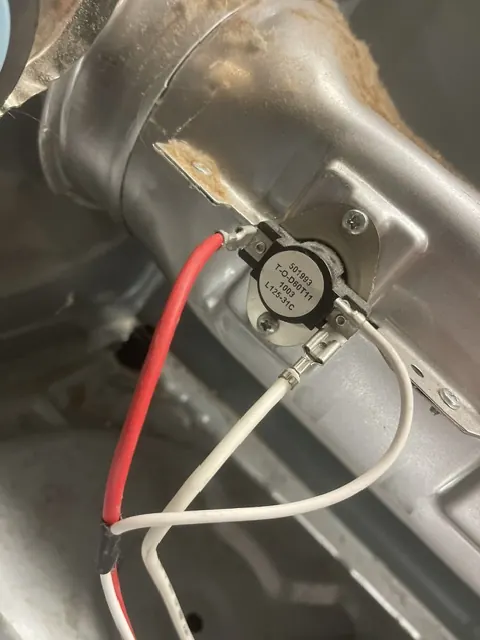
What this symptom usually means
A clogged dryer vent usually shows up first as longer drying times, then as a hot laundry room, a dryer that is hot to the touch, or a Check Vent light. The dryer pushes hot, damp air and fine lint through the lint screen, the duct behind the machine and the hood on the outside wall. Lint that gets past the screen collects in the duct, especially at bends and low spots, and at the outside flap. Whirlpool says its AF or Check Vent message means the lint screen or vent is clogged, or the vent is crushed, kinked or has too many turns, and that the dryer keeps running while the light is on. Natural Resources Canada adds a cause people miss: dryer sheets can leave a film on the lint screen that cuts airflow even when the screen looks clean.
The concern is fire as much as drying time. NFPA says the leading cause of home clothes dryer fires is failure to clean them, and advises cleaning lint out of the vent pipe once a year, or more often if drying takes longer than normal. Toronto Fire Services says plastic ducts are more prone to kinking, sagging and crushing, which leads to lint build-up, and that rigid or flexible metal ducting should be used. In Ottawa and Gatineau, winter adds its own blockage: NFPA says to make sure the outdoor vent flap is not covered by snow, and drifts, ice and freezing rain can seal it. RepairWell does not clean dryer vents. When we diagnose a dryer, we check airflow at the machine and at the outside hood, and if the vent needs cleaning or replacement, we tell you in writing so you can have a vent specialist do it.
Checks you can do yourself
- Clean the lint screen, then wash itClean it before or after every load, as NFPA and Toronto Fire Services advise, and never run the dryer without it. If you use dryer sheets, Natural Resources Canada says they can leave a film that reduces airflow: scrub the screen with warm soapy water and let it dry fully before putting it back. If water beads on the mesh instead of running through, the film is there.
- Feel the airflow at the outside hoodRun the dryer on a heated setting and go outside. You should feel a strong flow of warm air and see the flap open. Toronto Fire Services says to check that the outdoor flap opens when the dryer is operating. Weak flow with a clean screen points to a restriction in the duct.
- Clear the hood openingRemove lint, leaves or snow that you can reach at the hood. Whirlpool says the hood should be at least 305 mm (12 in) above the ground and clear of debris and nests. After a snowfall or drifting, check it along with other vents on that wall. Don't push anything up into the duct.
- Look at the duct behind the dryerWith an electric dryer switched off, pull it forward gently and look at the connector duct. Whirlpool calls for 10 cm (4 in) heavy metal duct and warns that foil and plastic can collapse or be crushed. If the duct is squashed, disconnected or made of plastic or foil, stop using the dryer until it's replaced. On a gas dryer, don't pull it out; leave that to the technician.
- Watch the drying timeNFPA says to clean lint out of the vent pipe once a year, or more often if drying takes longer than normal. If a normal load of towels now needs two cycles, treat it as a vent warning, not just an inconvenience.
- Check Vent light or AF codeOn Whirlpool dryers this means restricted airflow. Whirlpool's steps are to clean the lint screen, look for crushing or kinks in the vent, make sure the outside hood is clear, and test with a timed dry cycle; if the light stays on, it says to contact a venting specialist.
- Keep it safe until it's sortedDon't leave the dryer running when you go out or go to bed, as NFPA and Toronto Fire Services advise. Keep boxes, laundry and cleaning products away from it, and check that the smoke alarms on every storey work.
Nothing above involves gas, wiring, refrigerant or removing panels.
What you notice, and what it can point to
Listed in no particular order. They help you describe the problem; only an inspection confirms the fault.
Towels need two cycles; the lint screen is clean
Could point to: Lint build-up in the duct or at the hood (NFPA)
Next step: Check airflow at the hood; have the vent cleaned
Check Vent light or AF code
Could point to: Restricted airflow: clogged screen or vent, crushed duct or too many turns (Whirlpool)
Next step: Clean the screen, check the duct and hood, run a timed dry; call a vent specialist if it stays on
Flap at the outside hood doesn't open
Could point to: Lint, ice, snow or a nest blocking it
Next step: Clear what you can reach; have a stuck hood replaced
Laundry room hot and humid while the dryer runs
Could point to: Exhaust escaping from a loose or torn duct
Next step: Stop using the dryer until the duct is reconnected
Dryer top and door very hot, scorching smell
Could point to: Airflow restricted enough to overheat
Next step: Stop, let it cool, book a diagnosis
Screen looks clean but water beads on it
Could point to: Dryer-sheet film blocking the mesh (Natural Resources Canada)
Next step: Scrub the screen in warm soapy water and dry it fully
How it differs by design
- Vented dryers (most electric and all gas models): everything on this page applies. Whirlpool specifies 10 cm (4 in) heavy metal vent, as short and straight as possible, with the outside hood at least 305 mm (12 in) above the ground, and says longer runs and more elbows reduce airflow.
- Gas dryers: the exhaust also carries combustion products, so a blocked vent is a safety issue beyond drying time. NFPA says gas dryers should be inspected by a professional to make sure the gas line and connection are intact and free of leaks. Don't move a gas dryer to reach the duct; the gas connector can be strained.
- Ventless dryers (condenser and heat-pump models): there is no outside duct, but they still have a lint screen and, on many models, a second filter or condenser that needs cleaning as the manual describes. A clogged filter on these gives the same long drying times.
- Long or hidden runs: townhouses and condos often vent through a long run inside a wall or ceiling, or up through the roof. Those runs clog faster and can only be cleaned from the ducts themselves. In a condo, the vent beyond your unit may be the building's responsibility; ask the property manager.
- Stacked or closet installs: tight spaces behind stacked units tend to crush the short connector duct when the dryer is pushed back.
What our technician checks
These need panels off, live electrical tests or a licensed trade, so they are left to the technician:
- Opening the cabinet to clean lint from around the heater, gas burner or blower
- Testing or replacing thermal fuses, thermostats and sensors
- Moving a gas dryer or disconnecting its gas connector
- Cleaning or rebuilding ducts inside walls, ceilings or roofs, which is a vent specialist's job
Waived when you go ahead with the repair. You get the cause, the price and our repair-or-replace verdict in writing before any work.
Repairs a technician may recommend
After inspection, not from the symptom alone.
Airflow check and a written vent finding
During a dryer diagnosis the technician checks airflow at the machine and at the outside hood. If the vent run needs cleaning, repair or replacement, it goes in the written finding so you can pass it to a vent specialist. RepairWell does not clean vents.
Connector duct correction
When the short duct between the dryer and the wall is crushed, torn, or made of foil or plastic. The technician may recommend replacing it with metal duct of the size the manual gives.
Thermal fuse or high-limit thermostat
When restricted airflow let the dryer overheat and a safety device opened. Replacing it without fixing the airflow only repeats the failure. See dryer overheating.
Internal lint cleaning
When lint has built up inside the cabinet around the blower, the heater or the gas burner. This means removing panels.
Blower wheel or housing
When the blower is clogged, cracked or loose and moves little air even with a clear vent.
Moisture sensor or airflow sensing
When the dryer reports a vent problem with a clear vent, or runs on long on an automatic cycle.
Brands we see with this problem
Codes, parts and access differ by brand; the brand pages cover where the model label is and what to expect.







Brand-specific repair and error-code guides
Cost, and whether to fix it
What the repair costs depends on the part, the labour and whether a second visit is needed for an ordered part; the written finding gives the total before any work. Our guides on what drives repair costs, dryer repair costs and repair versus replacement explain how to weigh it.
When to book
Book a dryer diagnosis if drying stays slow once the lint screen is clean and the hood is clear, if the Check Vent light returns, or if the dryer runs hot or smells of scorching. We check the dryer itself (heat, thermal safeties, blower and sensors) and the airflow at the machine and at the outside hood. RepairWell does not clean dryer vents: if the vent needs cleaning or replacement, the written finding says so, so you can call a vent specialist. The visit is $89, waived if you go ahead with a repair. Our guide to dryer vent safety covers the vent in more depth. See dryer repair or gas dryer repair; we serve Ottawa and Gatineau.
We handle this across Ottawa and Gatineau
Related problems
Dryer vent clogged: signs and what to do: questions
How do I know if my dryer vent is clogged?
The usual signs are longer drying times, a hot laundry room or dryer cabinet, weak airflow at the outside hood, and a Check Vent light on models that have one. NFPA says drying that takes longer than normal is a signal to clean the vent pipe.
How often should a dryer vent be cleaned?
NFPA says once a year, or more often if drying takes longer than normal. Whirlpool says every one to two years or as needed. Long runs, several elbows or a roof exit can need it more often.
Can a clogged dryer vent cause a fire?
Yes. NFPA says the leading cause of home dryer fires is failure to clean them. Lint burns easily, and a blocked vent keeps heat in the dryer and the duct.
Does RepairWell clean dryer vents?
No. We check airflow as part of a dryer diagnosis and put what we find in writing. If the vent needs cleaning, repair or replacement, we recommend a vent specialist.
Is the white plastic or foil hose behind my dryer safe?
Whirlpool says to use 10 cm (4 in) heavy metal vent and warns that foil and plastic can collapse or be crushed. Toronto Fire Services says plastic ducts are prone to kinking, sagging and crushing. Have them replaced with metal.
My dryer's outside vent is under snow. Is that a problem?
Yes. NFPA says to make sure the outdoor vent flap is not covered by snow. Clear it before you run the dryer, and check it again after drifting snow or freezing rain.
Sources
- NFPA: Clothes dryer and washing machine safety (tip sheet, hosted by the U.S. Department of Energy)
- Natural Resources Canada: Clothes dryers (ENERGY STAR)
- City of Toronto (Toronto Fire Services): Clothes dryers fire safety
- Whirlpool Product Help: How to check venting
- Whirlpool Product Help: AF or Check Vent, dryer
Sources checked 2026-09-24.
Book the diagnostic
Tell us this symptom and your postal code; it helps us bring the right parts.
Online booking is a request. We confirm the appointment by text or phone within 1 business hour.
- $89 diagnosticWaived when you go ahead with the repair
- Written finding on every visitCause, price and our repair-or-replace verdict
- 90-day warrantyOn labour and the parts we install